
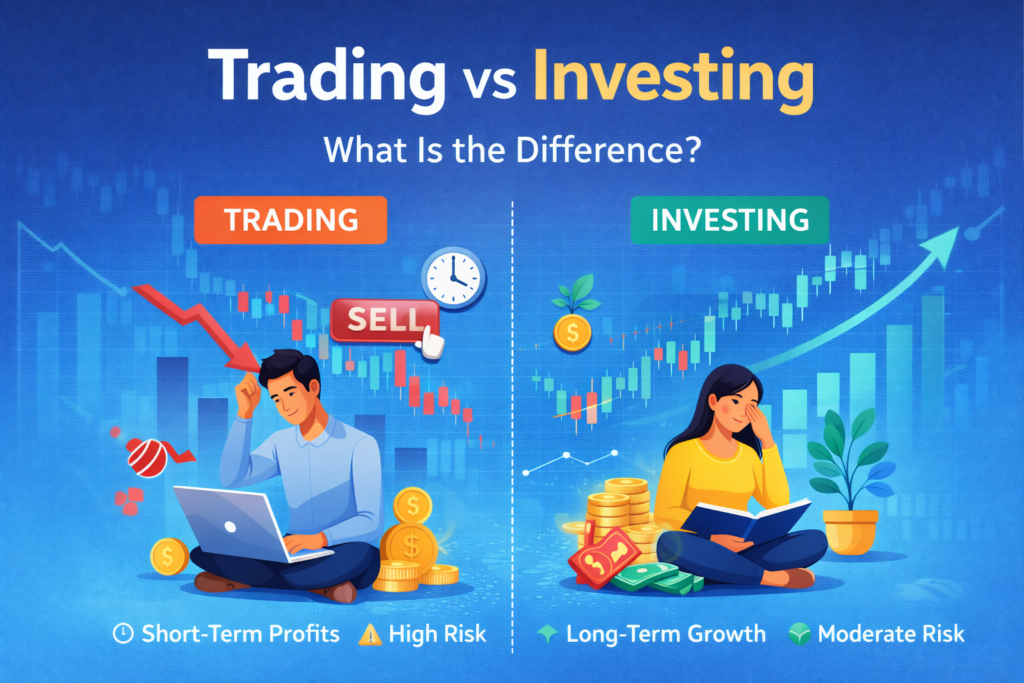
Many beginners entering the stock market often get confused between trading and investing. While both involve buying and selling stocks, their goals, strategies, timeframes, and risk levels are very different.
Understanding this difference can help you choose the right approach based on your financial goals, risk tolerance, and time availability.
This guide by Wealth Lake Advisory explains the key differences between trading and investing in simple terms.
What is Trading?
Trading refers to buying and selling stocks frequently in order to make short-term profits from market price movements.
Traders usually hold stocks for a few minutes, hours, days, or weeks rather than for long periods.
Key Characteristics of Trading
- Short-term approach
• Focus on price movements
• Requires constant market monitoring
• Higher risk compared to investing
• Requires technical analysis
Types of Trading
- Intraday Trading
Buying and selling stocks on the same day before market closing. - Swing Trading
Holding stocks for a few days or weeks to capture price swings. - Scalping
Making multiple quick trades for small profits. - Positional Trading
Holding stocks for a few weeks or months based on trends.
What is Investing?
Investing means buying stocks with the goal of long-term wealth creation. Investors typically hold stocks for years or even decades.
Instead of focusing on short-term price changes, investors focus on company fundamentals and long-term growth potential.
Key Characteristics of Investing
- Long-term strategy
• Focus on company fundamentals
• Lower trading frequency
• Compounding wealth over time
• Generally lower stress than trading
Key Differences Between Trading and Investing
|
Feature |
Trading |
Investing |
|
Time Horizon |
Short-term |
Long-term |
|
Goal |
Quick profits |
Wealth creation |
|
Risk Level |
High |
Moderate |
|
Analysis Type |
Technical analysis |
Fundamental analysis |
|
Monitoring |
Daily monitoring required |
Occasional monitoring |
|
Transaction Frequency |
Very high |
Low |
Which is Better for Beginners?
For most beginners, long-term investing is usually the safer and more practical approach.
Reasons include:
- Less stress from daily market movements
• Lower transaction costs
• More time for compounding returns
• Reduced risk of emotional decisions
Trading requires experience, discipline, and deep market knowledge, which beginners usually develop over time.
Common Mistake Beginners Make
Many new investors enter the market thinking trading is the fastest way to become rich. This often leads to:
- Overtrading
• Emotional decisions
• Losses due to lack of strategy
• Following random tips
Instead, beginners should focus on learning, disciplined investing, and proper guidance.
How Wealth Lake Advisory Helps Investors
At Wealth Lake Advisory, we help individuals who want to invest in the stock market but are unsure about where to start or whom to trust.
Our platform connects investors with experienced stock market professionals who provide guidance based on financial goals and risk tolerance.
We focus on:
- Beginner-friendly investment guidance
• Connecting investors with market experts
• Promoting disciplined long-term investing
• Helping investors avoid common mistakes
Final Thoughts
Both trading and investing have their place in the stock market. However, they require different skills, strategies, and mindsets.
If your goal is long-term financial growth and stability, investing is usually the better path.
Understanding these differences will help you make smarter and more confident financial decisions.
 Want expert guidance before investing in the stock market?
Visit Wealth Lake Advisory and connect with experienced market professionals.